Why a Literary Feast?
Thank you, Lewis, for reminding us that feasts are biblical.

In The Voyage of the Dawn Treader, Caspian, Lucy, Edmund and the rest of their crew finally reach Aslan’s Table and discover the remaining three of the Seven Lost Lords they had been seeking, but they are too wary to partake of the feast spread out before them. Understandably so. At the head of the table, three sleeping men are chained to their seats with overgrown hair and beards tangled together. They are impossible to rouse from their slumber and yet somehow alive.
Ramandu’s daughter approaches and speaks to them: “Travellers who have come from far to Aslan’s Table . . . Why do you not eat and drink?” Caspian tells her that they fear the food is enchanted, and she assures them the sleepers never even tasted it. Instead, they had quarreled rather than feasting together, and one of them caught up the Knife of Stone, which Lucy then recognizes as the same one the White Witch had used when she killed Aslan at the Stone Table.
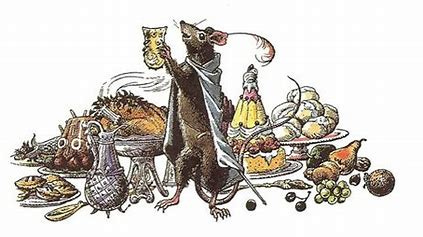
Following Reepicheep’s example (as he dined on cold peacock no less), the entire company sets to eating the feast. They learn that the table is called Aslan’s Table because it was placed there at his bidding and the food is eaten and renewed every day. Lewis’s meaning is unmistakable. Although the original Stone Table was a place of torture and the knife an instrument of death, this table is now a place of feasting where the knife is kept in honor. What once was used to empty and destroy has now become a place of plenty and satisfaction. Similar to manna, the food is rejuvenated daily and never allowed to be stored or spoiled.
This Substack is named in honor of both the table C.S. Lewis writes about and the table of the Lamb which it alludes to. May the symbolism of the feast make us hungry to consume more. Blessed are those who hunger and thirst for righteousness, for only then will they be filled. If we never hunger, we won’t know what it is to crave the best things. We will mindlessly fill up on whatever salty treat is in the open crinkly bag. This gift of hunger is the good of a fast. It reminds us that intentional eating is so much more than guilt free: it is lavish and celebratory and meets our very real need to connect to others. The Bible contains seven annual feasts, three of which last a week. A Biblical Sabbath looks more like a feast than an average Sunday dinner. Lighting candles, saying special words over bread and wine, preparing enough food so that you can take the next day off cooking: this sounds more like Thanksgiving or Christmas than a typical weekend meal.

Perhaps mindless eating has replaced our feasting, or perhaps we have been dissuaded by those who slumber at the table. The world is filled with sleeping saints who have been so busy fighting over the best interpretation of the Lord’s table, they have forgotten to keep the feast. Let this Substack be a place of hungering and thirsting for more, of tasting and seeing who is good. As we meditate on both the cross and the coming feast, may we see that the place of torture, pain, and loss has now become our greatest good, lasting comfort, and fullest cup. Come share with me a literary feast which points us to a coming party, hovering even now just out of sight.