
Dewlight
poem

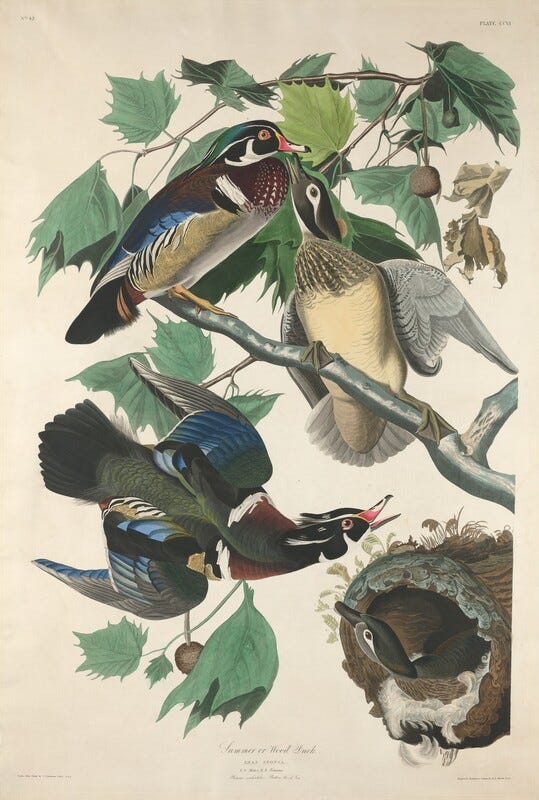
A ripple slides across the pond like dew; light
cascades from a muskrat’s back, green cattail
held tight in his teeth, body submerged. Night
had swaddled our arrival in dark quiet
which unwraps in falling birdsong as I fail
to name each one. A wood duck alights
on water’s surface: wings ballooned in flight
slow descent, balanced by his rudder-tail
in tandem with webbed feet. After a night
of rest in oak tree cavity, his sight
is set on pond grass and his mate who sails
in to land beside him low and light.
If I move, they will cease to bathe in bright,
so I rest my hand on the psalms I failed
to feel but prayed as I drove through the night.
When my head sags, I’m chilled in shadow’s height;
I lift my face, and like a bridal veil
a shadow lifts. I’m bathed in morning light.
I’ll stretch my wings, let sun push back the night.
Composition Notes
My favorite part about our new house is the deck that overlooks a pond which is frequented by wood ducks, mallards, turkeys, and geese. The sound of their splashing has accompanied my Bible reading in a way that soothes my nervous system and primes a wakeful attentiveness that my solidly night owl habits can struggle to find in the morning. This is the first poem I wrote since our move, and it felt like water coming from a rock.
I was praying outside, and my head was bowed in concentration, but also in heaviness. When I lifted my head, I moved the inches required to go from shadow to sunlight. It sounds so simple. It was a simple movement, but it carried a lesson my body needed to inhabit. I turned my face to the east and let the morning light warm my skin, touch my closed eyelids, bathe my worries in consolation. I realized, again, that sometimes the difference between light and darkness is the focus of our gaze.
As I sat there, I thought about all the beauty of the natural world that had been hidden from my sight when I arrived at the property after midnight with a van full of sleeping or silly-from-being-overtired children. For all I noticed or cared then, the pond wasn’t even there. It was hidden from my sight and consciousness. A span of six hours was all it took to transform the world from an alien landscape of dark shapes into a thing of beauty with dimension and color and dewy loveliness.
Lifting my head was all it took to bring my countenance from chilly shadows into morning sunlight. The very real burdens I was bringing before the Lord aren’t all resolved. But I know who declared “It is finished” over the war. As a recovering optimist, I try not to indulge in the oversimplifications that have caused me in the past to ignore or belittle my own pain, and yet we get to rest in the affirmations of Scripture which declare it is deep wisdom to hope in the goodness of God. Though sorrows may last for a night, joy comes in the morning. I’m learning to live in that tension of acknowledging my feelings before Father God, and letting the victory of Jesus’ declaration that “It is finished” minister to my weary heart. Both are real. Both are welcome in his throne room. Sometimes the most radical thing we can do is lift our head to the light. Abide in the vine. Take time to meditate on Scripture, whether we feel it or not.
Psalm 24:7-9
Lift up your heads, O gates!
And be lifted up, O ancient doors,
that the King of glory may come in.
Who is this King of glory?
The Lord, strong and mighty,
the Lord, mighty in battle!
Lift up your heads, O gates!
And lift them up, O ancient doors,
that the King of glory may come in.
Psalm 121:1-2
I lift up my eyes to the hills.
From where does my help come?
My help comes from the Lord,
who made heaven and earth.
Amen, Abigail. "Sometimes the most radical thing we can do is lift our head to the light. Abide in the vine. Take time to meditate on Scripture, whether we feel it or not." These were words I needed to hear today, words that needed to come through a poem and through a testimony. Thank you for sharing both.
You captured that beautiful embrace of life’s intricacies so well, that balance of being a human within God’s unknowable plan.